

Peacebuilding is often presented as a universal good: a framework for rebuilding institutions, restoring relationships, preventing violence, and supporting vulnerable communities. Yet peacebuilding does not operate in a vacuum. It is shaped by systems of knowledge, authority, funding, governance, and technology that influence whose voices are heard, whose priorities are advanced, and whose experiences remain marginalized.
Rethinking Peacebuilding is an ongoing research and public scholarship initiative of The Roundtable Consortium that critically examines the assumptions, structures, and power relations that shape contemporary peacebuilding practice. Drawing from conflict analysis, critical peace studies, decolonial scholarship, migration governance, human trafficking research, digital governance, and community-centered approaches to social change, the project explores both the promise and limitations of existing peacebuilding models.
Rather than asking whether peacebuilding should be accepted or rejected, this initiative investigates a more challenging question:
| "How can peacebuilding become more accountable, plural, locally grounded, and responsive to lived realities while continuing to support the institutions, relationships, and solidarities necessary for sustainable peace?" |
Through essays, research briefs, roundtable discussions, and interdisciplinary inquiry, the project examines critical tensions at the heart of contemporary peacebuilding, including protection and governance, inclusion and coloniality, institutional authority and local agency, and the growing role of digital technologies in shaping peacebuilding practice.
Consistent with The Irreverent Approach, this project seeks to question prevailing assumptions, explore alternative frameworks, and expand the conversation about what meaningful, just, and effective peacebuilding can become in the twenty-first century.
The Project Has Entered Its Next Phase
Rethinking Peacebuilding began as a four-part public-scholarship series examining how peacebuilding can repair harm while also reproducing hierarchy, dependency, surveillance, and external control.
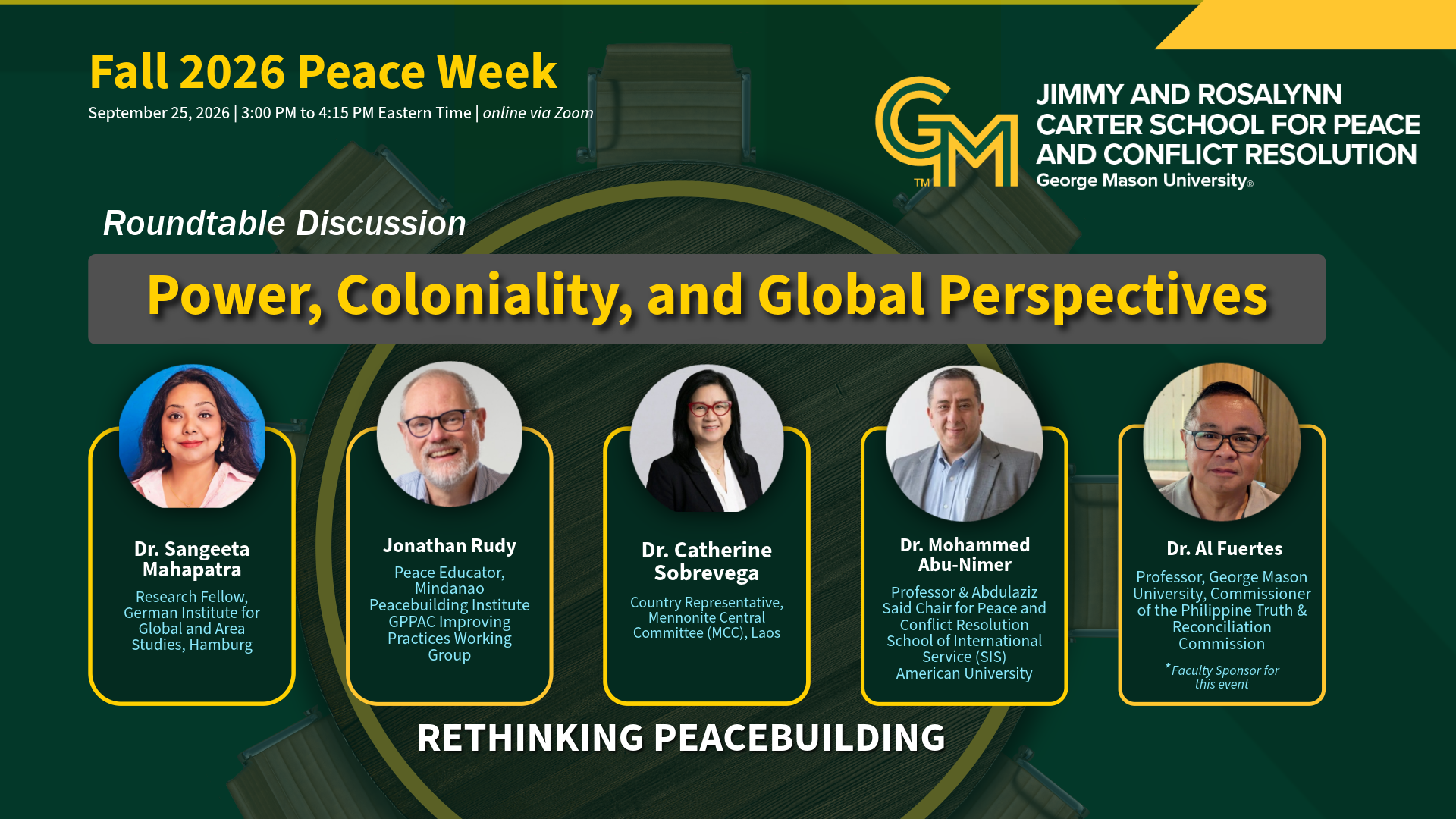
The September 25, 2026 Carter School Peace Week roundtable moved the project from critique toward reconstruction. Five scholar-practitioners brought perspectives from human trafficking, migration, reconciliation, international development, peace education, digital authoritarianism, human security, and transitional justice into a live interdisciplinary discussion.
The conversation did not produce a completed framework.
| "It changed the work the framework must now do." |
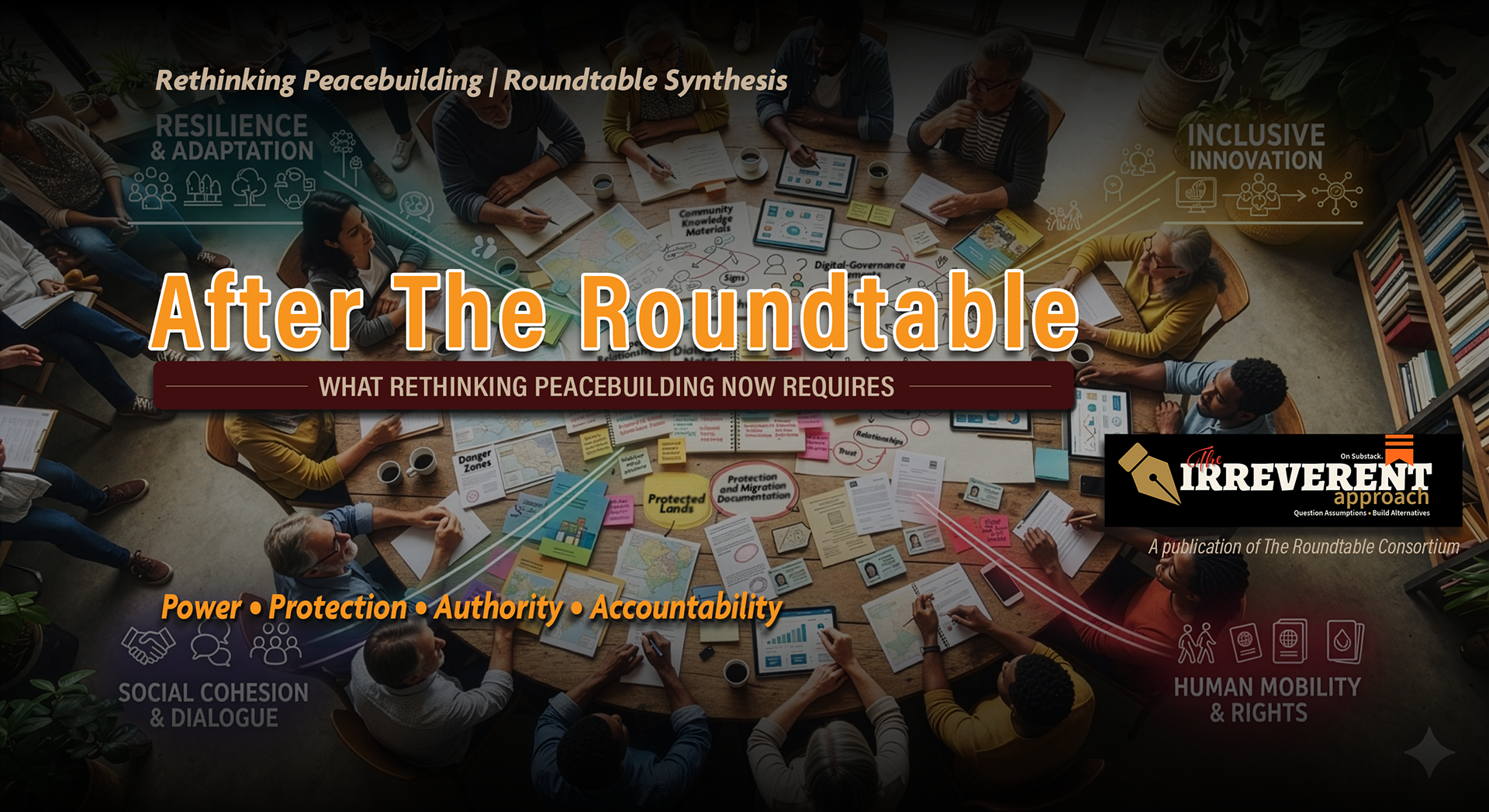
After the Roundtable
The roundtable revealed several obligations that contemporary peacebuilding can no longer treat as secondary:
‣ Protection must expand agency rather than manage people from above.
‣ Data governance and informational integrity now belong within peacebuilding.
‣ Dialogue cannot substitute for confronting structural violence.
‣ Structural analysis and locally meaningful action must remain connected.
‣ Funding must be examined as a relationship among resources, authority, risk, and accountability.
‣ Peace must become economically livable, civically trustworthy, and open to consequential disagreement.
The discussion also showed that critique is not enough. If peacebuilding institutions reproduce unequal power, the answer cannot be limited to better language, expanded consultation, or institutional withdrawal. The next phase must identify the responsibilities, safeguards, and distributions of authority required after critique.
Four Emerging Areas
The continuing inquiry is now taking shape around four provisional areas:
Shared Authority and Plural Knowledge
Accountable Accompaniment and Resource Justice
Accountable Protection and Digital Self-Determination
Material and Informational Peace
Peacebuilding becomes locally authored only when affected communities can influence the questions, decisions, resources, and measures through which peace is defined.
International support should expand community decision-making power, share risk, and remain accountable for both engagement and withdrawal.
Protection should preserve safety, agency, meaningful consent, control over personal information, and the ability to challenge institutional decisions.
Peace must become economically sustainable and supported by sufficient civic trust, credible public information, and shared conditions for democratic deliberation.
These areas are not a completed framework. They will guide a second four-essay series and inform a collaborative position paper, practical applications, comparative case analysis, and the developing architecture of a future textbook.
Read the Post-Roundtable Synthesis