
I first encountered that question in the television series Furious. I thought it belonged to an essay about trafficking, complicity, and the professionals who protect powerful people.
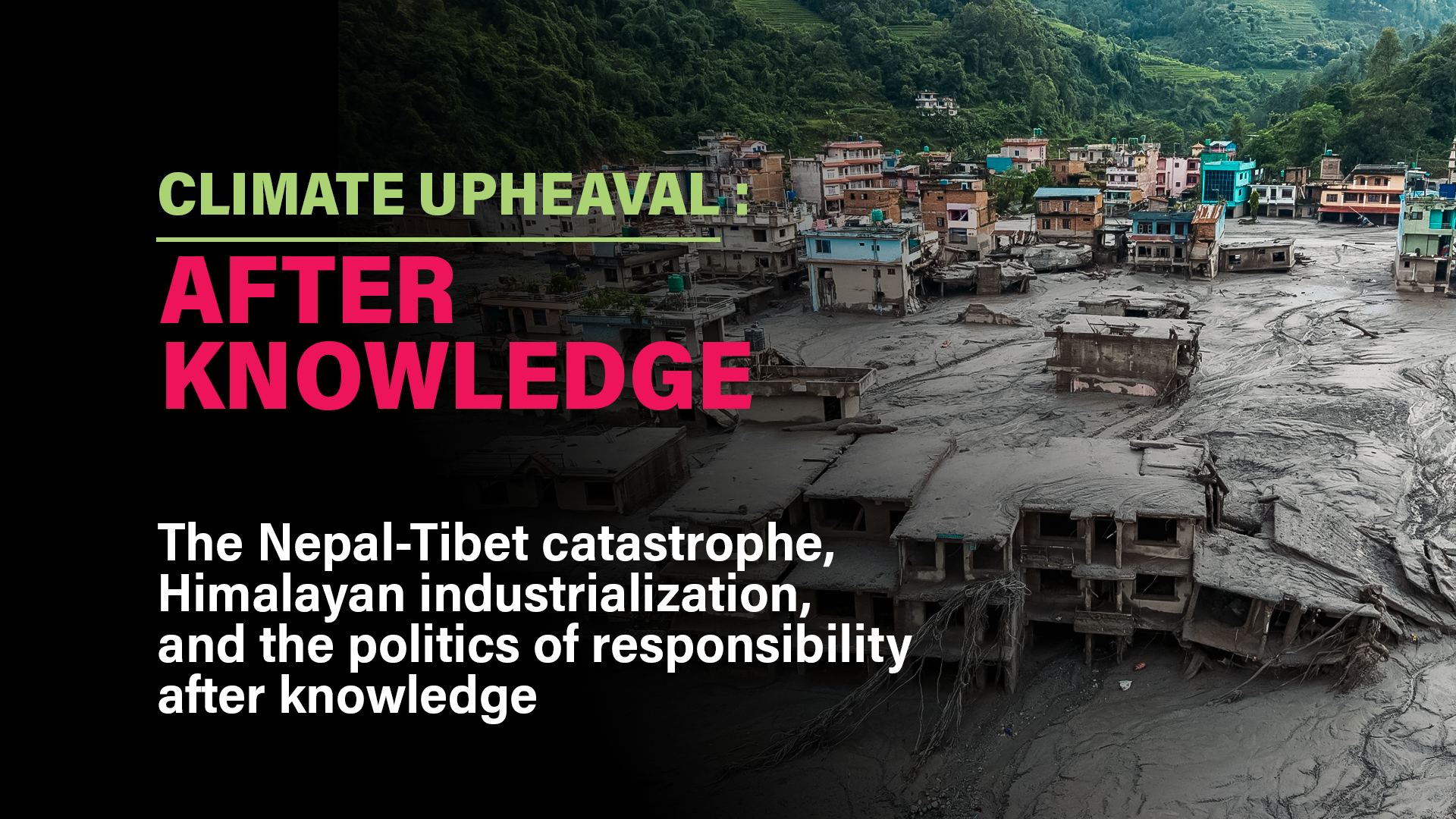
Then bedrock and glacial ice collapsed near Langtang Lirung, close to the Nepal-Tibet border.
The resulting avalanche and debris flow devastated settlements, roads, bridges, border facilities, and hydropower infrastructure. The precise cause remains under investigation, and no evidence currently establishes that a particular dam, tunnel, road, or infrastructure project triggered the collapse.
That distinction matters. Accountability must begin with evidence.
But the catastrophe occurred within a larger context that cannot be dismissed as background. Human-caused warming is altering high-mountain environments while China, India, Nepal, and Bhutan expand dams, tunnels, roads, transmission systems, and hydropower projects across a geologically fragile region.
The disaster also exposed profound inequalities in knowledge and institutional capacity. China possesses substantially greater ability to monitor upstream terrain across Tibet, while Nepal remains vulnerable to hazards originating beyond its observational reach. The two governments dispute whether adequate warning information was provided.