

The Roundtable Consortium was founded on a simple but uncompromising idea: to challenge power, amplify truth, and create a space where global justice is examined without fear or favor. What began as a collaborative podcast quickly expanded into a multidisciplinary platform—one that interrogates the forces shaping our world and elevates voices too often pushed to the margins.
Our website serves as the living archive of this work. Here you’ll find our podcast episodes, long‑form articles, roundtable discussions, and investigative projects—each designed to break down complex global issues into accessible, actionable insight. Whether we’re unpacking digital influence, mapping media‑literacy challenges, tracing the pipelines of modern authoritarianism, or exploring the hidden mechanics of human vulnerability, we aim to bring clarity to the places where opacity has long served the powerful.
As we grow, so do our ambitions. The Roundtable Consortium is now developing two major global initiatives:
• A comprehensive database of contemporary conflicts, designed to help researchers, educators, journalists, and peacebuilders track emerging patterns of political violence and instability.
• A global monitoring platform for human trafficking and crimes against humanity, dedicated to exposing the networks that exploit vulnerable populations and to supporting the work of advocates on the ground.
This project is built on collaboration among researchers, storytellers, justice advocates, and practitioners who work every day to understand and improve the world around us. At the center of that collaboration are our co‑hosts, writers, and founding members, whose perspectives make The Roundtable Consortium what it is.

Jamie Sackett
Co‑Host, Research Collaborator, and Founding Member
The Roundtable Consortium
The Roundtable Consortium
Jamie Sackett is a graduate student in Conflict Analysis and Resolution at George Mason University, whose work examines the structural, social, and political dynamics that drive contemporary conflicts and shape human vulnerability. With an undergraduate background in City, Urban, Community, and Regional Planning from Texas State University, she brings an interdisciplinary perspective that bridges community‑level analysis with global systems of governance and peacebuilding.
Sackett’s professional experience includes work as a Zoning and Permitting Intern with Paces, where she engaged in applied planning processes, and as a Journalism Intern for The Borgen Project. During her 12‑week journalism internship, she authored six published articles on issues related to international development, global health, poverty alleviation, and post‑conflict recovery, including analyses on food insecurity in Haiti, UN urban redevelopment in Mogadishu, global efforts to eliminate polio, innovations in desert agriculture, resilience in Libya’s higher education sector, and pathways toward reducing poverty in Colombia.
At The Roundtable Consortium, Sackett contributes to research design, podcast co‑hosting, and collaborative writing initiatives. Her interests include conflict transformation, global development policy, social systems, and the intersection between structural conflict and community resilience. She brings strong skills in writing, online journalism, and project management, supporting the Consortium’s mission to produce accessible, evidence‑informed analysis of global justice issues.
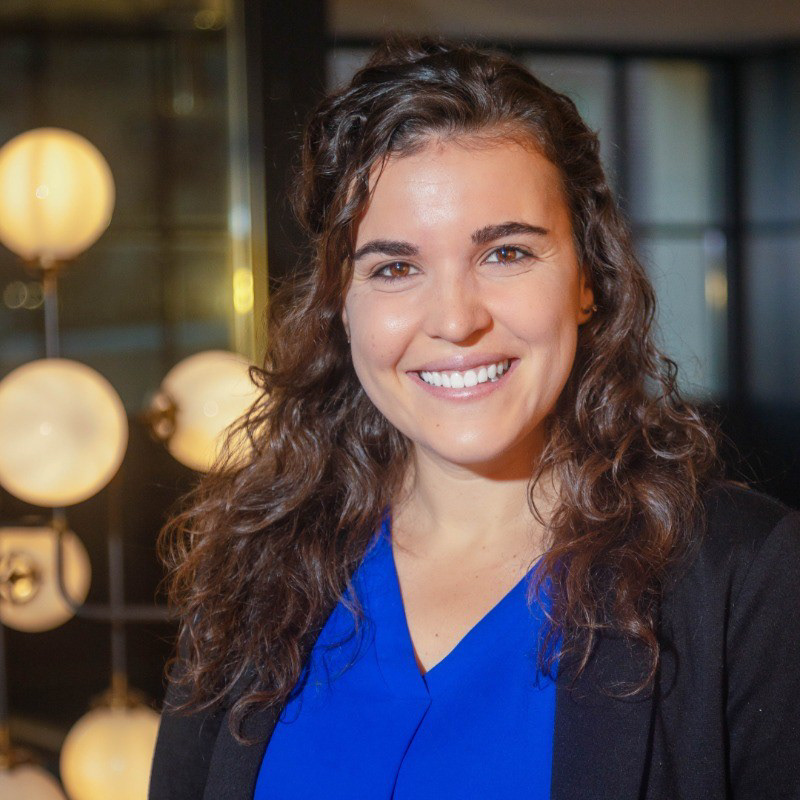
Sadie Lockhart
Co‑Host, Research Collaborator, and Founding Member
The Roundtable Consortium
The Roundtable Consortium
Sadie Lockhart is a community engagement practitioner, storyteller, and emerging peacebuilder whose work bridges arts-based practice, social impact, and conflict transformation. She currently serves as Manager of Community Engagement and Special Projects at Mission Partners, Benefit LLC, where she leads initiatives that strengthen community relationships, cultivate inclusive dialogue, and develop impact‑driven programming across diverse stakeholder groups.
With over a decade of experience in theater, youth empowerment, and community-centered arts, Lockhart has built a professional identity around the belief that storytelling and shared creative practices are essential tools for social cohesion. Her work includes serving as Director of the New Playwrights Festival for TYA ThinkTank Theatre, contributing to the development of emerging playwrights and youth‑oriented narratives that elevate marginalized voices. Additionally, she has held multiple roles at American Stage Theatre Company—including Teaching Artist, Community Engagement Associate, and podcast producer—where she facilitated public dialogue, curated educational content, and supported creative learning environments for young people and adults alike.
Since 2018, Lockhart has also served on the Board of Directors of One Thousand Schools in Honduras, supporting mission‑driven work focused on education, violence prevention, and youth empowerment in communities facing structural challenges.
She holds a BFA in Theatre from Towson University and is currently pursuing her Master of Science in Conflict Analysis and Resolution at the Jimmy and Rosalynn Carter School for Peace and Conflict Resolution at George Mason University (2025–2027), where she is expanding her academic and practical work in peacebuilding, community dialogue, and transformative social justice initiatives.
At The Roundtable Consortium, Sadie Lockhart contributes her strengths as a Joy Cultivator, Community Connector, and Inclusive Storyteller, helping shape research, conversations, and programming that center humanity, dignity, and the power of shared narratives.

Silvestre Acedillo
Scholar, practitioner, and founder working at the intersection of conflict, justice, and structural vulnerability.
Silvestre Acedillo is a conflict analysis and resolution scholar whose work focuses on human trafficking, structural violence, gender-based exploitation, and the protection of marginalized communities in the Philippines. He earned his Master of Science in Conflict Analysis and Resolution from George Mason University in May 2026, with a concentration in Social Justice Advocacy and Activism, and is currently advancing his doctoral research on human trafficking as a form of structural conflict.
His research examines how trafficking emerges not simply as a criminal act, but as an outcome of broader structural conditions—including migration, urban poverty, displacement, gender norms, and family systems. As a Fulbright research applicant, he has proposed a project titled The Child at the Center: Human Trafficking as Structural Conflict in the Urban Philippines, to be conducted in affiliation with Silliman University. His work focuses on migration corridors connecting Mindanao, Cebu, and Negros, exploring how vulnerability is produced within urban environments and, in turn, becomes exploitation.
Silvestre brings more than two decades of professional experience across law enforcement, military service, international liaison work, nonprofit leadership, and public scholarship. He served as a law enforcement officer with the Metropolitan Police Department in Washington, DC, where he encountered exploitation affecting vulnerable populations within complex urban environments. Prior to that, he completed a 24-year career in the United States Navy, serving in leadership, operations, public affairs, and international relations roles, including assignment in Okinawa, Japan, where he supported cross-cultural coordination and host-nation engagement.
He is the founder of The Roundtable Consortium, a public scholarship platform dedicated to advancing research, dialogue, and analysis on conflict, governance, transnational crime, and global justice. Through this work, he connects academic research with real-world challenges, producing research-informed commentary and facilitating collaborative exchange.
His academic and professional work reflects a commitment to trauma-informed and survivor-centered approaches, with an emphasis on prevention-based responses to human trafficking that address structural causes rather than symptoms alone. His research draws on qualitative methodologies, including semi-structured interviewing and thematic analysis, to examine how stigma, trust, and legitimacy shape societal responses to exploitation.
His work is both professional and deeply personal, shaping a research agenda grounded in the belief that trafficking does not begin with a criminal act, but with the absence of protection within systems that are meant to provide it.